Wooby

Top 5 Stories to Teach Kids About Good Touch And Bad Touch
Published On: 24 September 2026

Teaching good and bad touch to our kids is very important for us as a parent, we want our kids to be safe from every bad touch. Although it can be difficult, having a conversation with children about their appropriate and inappropriate interactions is one of the most important things we as parents can do. Stories can therefore be a really beneficial method for learning. We'll share some easy yet best stories in this blog that you can read to your kids to help them learn about boundaries and safety. These tales make learning simple and interesting for children ages 5 to 12. Let's explore these well-selected stories that teach children how to be safe from the bad touch:
1. The Bubble Shield
Age Group: 5-7 years
There was a superpower turtle called Timmy, having a magical bubble shield around his body. When someone tries to touch him in a way that causes him discomfort, the shield lights up. Toby learns that he can say “No” and tell a trusted adult if the bubble shield lights up.
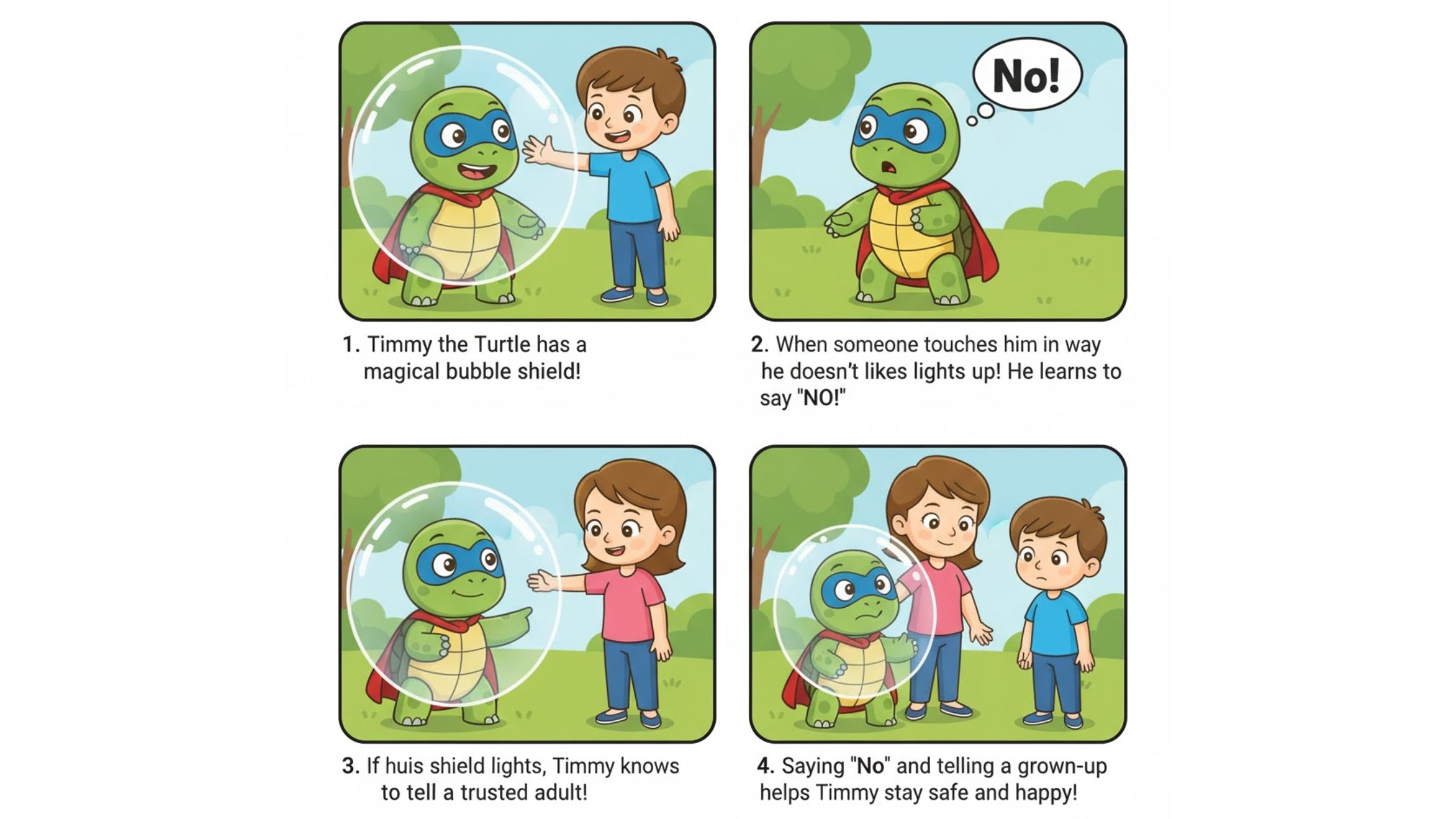
Lesson:
- It reinforces the concept of personal space in kids.
- It helps them stand for themselves and trust their instincts and speak up with confidence if they feel uneasy.
Why It Works:
Tell your kids that they also have their own invisible bubble shield, which no one can break or pass if they feel uncomfortable. It’s easy for younger kids to imagine their own "personal boundary." It empowers them to recognize when something doesn’t feel right and stand against it. Ultimately, when they grew older, this becomes a part of their personality to say no to every bad touch.
2. The Safe Circle
Age Group: 6-8 years
The story is of a girl, Mansi, who learns about her “Safe Circle” from her class teacher. Mansi is told that only specific people in her life, like her parents or caregivers, are part of her Safe Circle and can help with personal tasks like bathing or dressing. One day, a stranger tries to touch her hair and break her Safe Circle rules, and Mansi confidently says, “Stop!” and tells her parents.
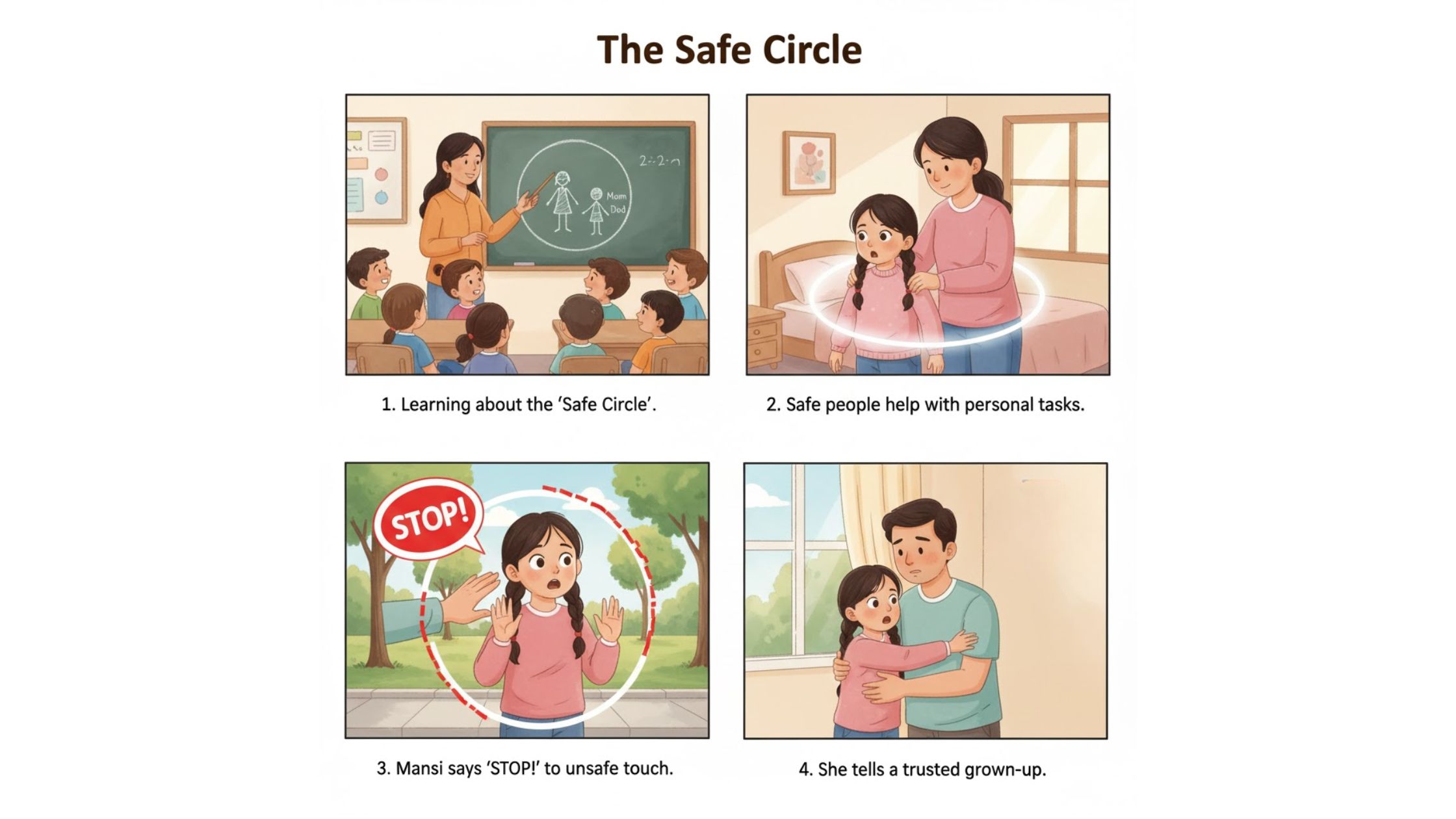
Lesson:
- Share with them who is similarly a part of their safe circle.
- This helps kids understand that some touches are not good, even from familiar people outside their circle.
Why It Works:
It gives children clear steps for understanding boundaries and who they can trust with personal matters.
3. The Brave Little Starfish
Age Group: 7-9 years
The story begins with a starfish named Strella, who loves the ocean, but sometimes she feels scared when unknown big fish come too close. She had a turtle friend who once gave her advice to face this situation by following three magic steps: "Say no, go away, tell someone." When a fish makes Strella uncomfortable, she uses the steps and finds help from her sea turtle friend.
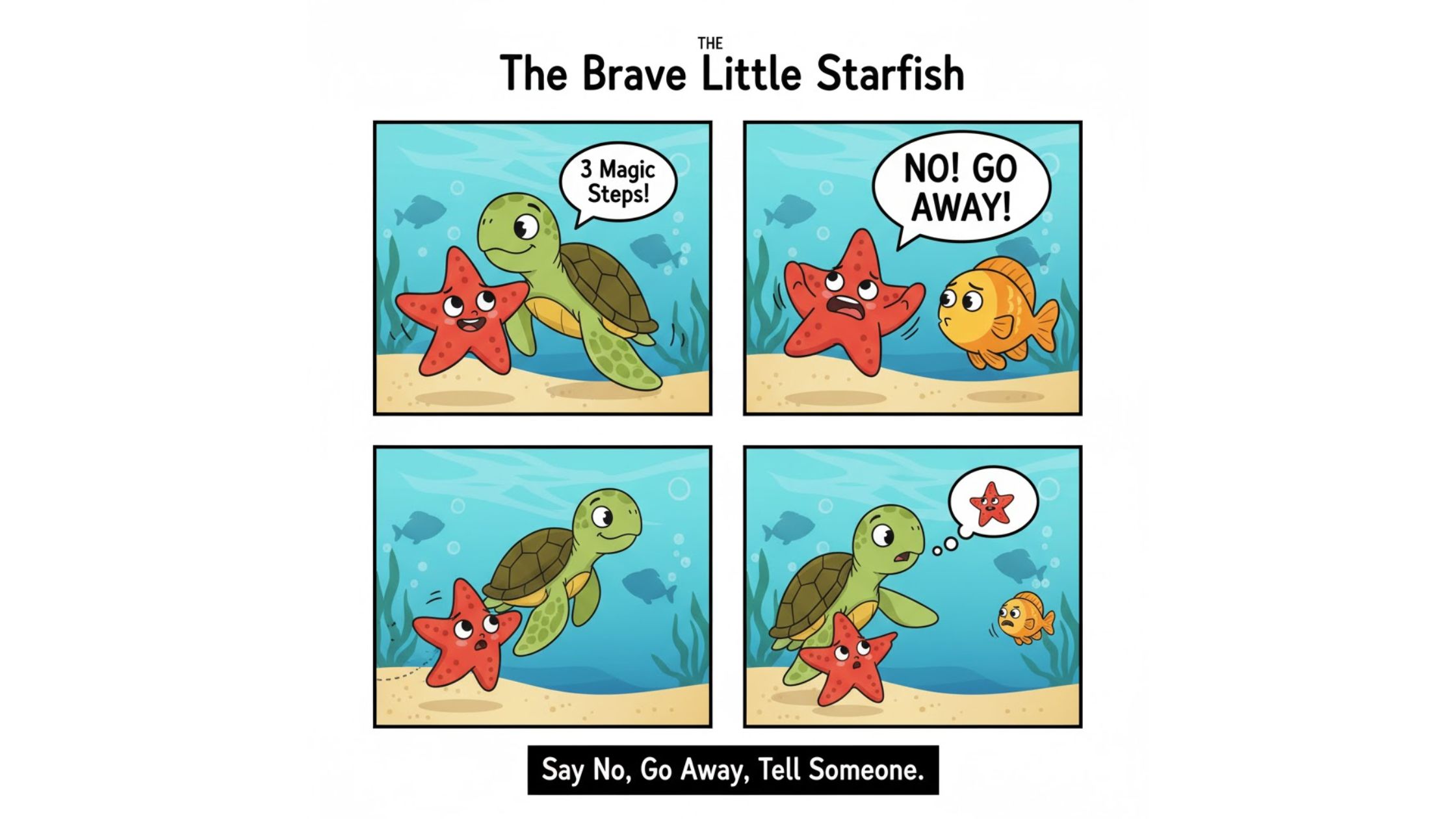
Lesson:
- Share with them a simple three-step action plan: Say No, Go Away, Tell Someone.
- This encourages kids to talk to a trusted adult.
Why It Works:
These shared steps make it easy for kids to remember how to react in unexpected and uncomfortable situations.
4. The Talking Kite
Age Group: 8-10 years
A young boy, Arjun, loves flying kites. One day, his favorite kite magically talks and teaches him about safe and unsafe touches. Arjun gets surprised and starts to talk with the kite. The kite explains that touches that make you feel scared, confused, or sad are unsafe and are bad touches and should always be shared with a trusted adult like your parents or someone nearby who can help.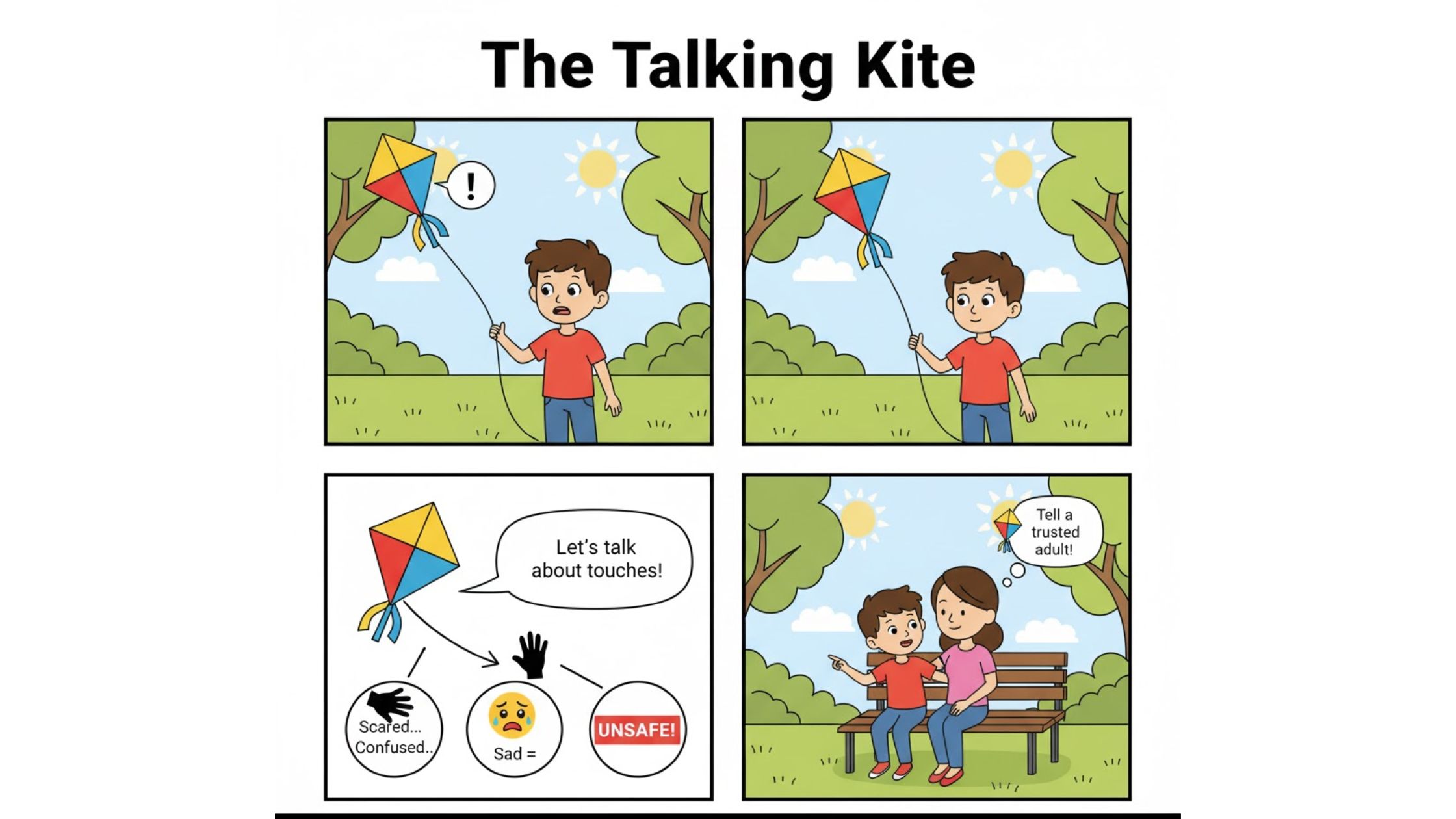 Lesson:
- This is most simple and links emotions to bad touch in simple terms.
- Highlights the importance of speaking up confidently without fear or shame.
Why It Works:
The magical kite adds an element of fun while addressing a serious topic in a relatable way for kids.
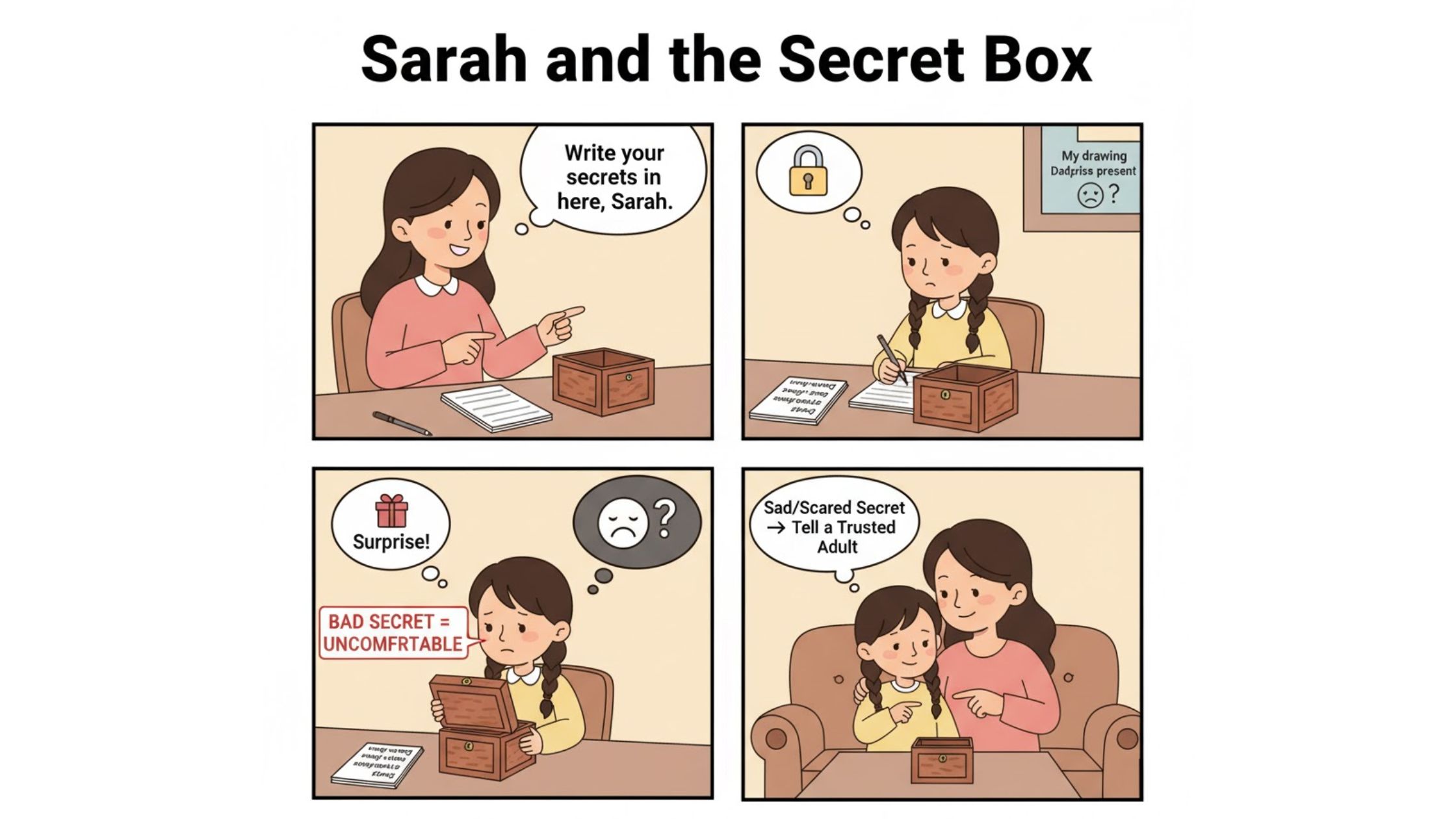
5. Sarah and the Secret Box
Age Group: 10-12 years
Sarah's tuition teacher gives her a task: to write the things that are secrets and that she would share only with someone she truly trusts. Sarah did the same and wrote about it. Through this activity, Sarah learns that some secrets are only shared with someone they trust, like their parents, or someone they trust like experience, which makes them feel bad, secrets, like surprises, are okay, but secrets that make her feel bad or uncomfortable should always be shared with an adult she trusts.
 Lesson:
- Differentiates between bad secrets (uncomfortable circumstances) and positive secrets (surprises).
- Encourages children to openly express their emotions to responsible adults.
Why It Works:
Older kids are often exposed to the concept of secrets, and this story helps them navigate which ones should never be kept and shared with someone they trust.
Key Takeaways for Parents
- Try avoiding giving complicated explanations to your child, as it can make them confused and ask for more detailed explanations.
- Being open and friendly helps your child have a better relationship with you so they share any problem they face without hesitation. Whenever they share something, become a good listener and try to understand their feelings and guide them accordingly.
- Adjust stories as your child will understand better during the conversation based on their age and understanding.
- Go through these stories and easy lessons monthly to help remember and stay aware.
Summary
We have cover stories for kids so that they can better understand good and bad touch, and these meaningful tales help them develop their self-esteem, awareness, and trust with you. In addition to teaching them about appropriate and inappropriate touch. Remind yourself that it's a continuous lesson to assist children in properly navigating the world, not a one-time encounter. Keep having open conversations with your child, behave with them like their first best friend. Use the above shared stories to share with your child and build strong relationships for better understanding.
