Wooby

15 Best Brain Booster Foods For Kids Focus & Memory
Published On: 24 September 2026
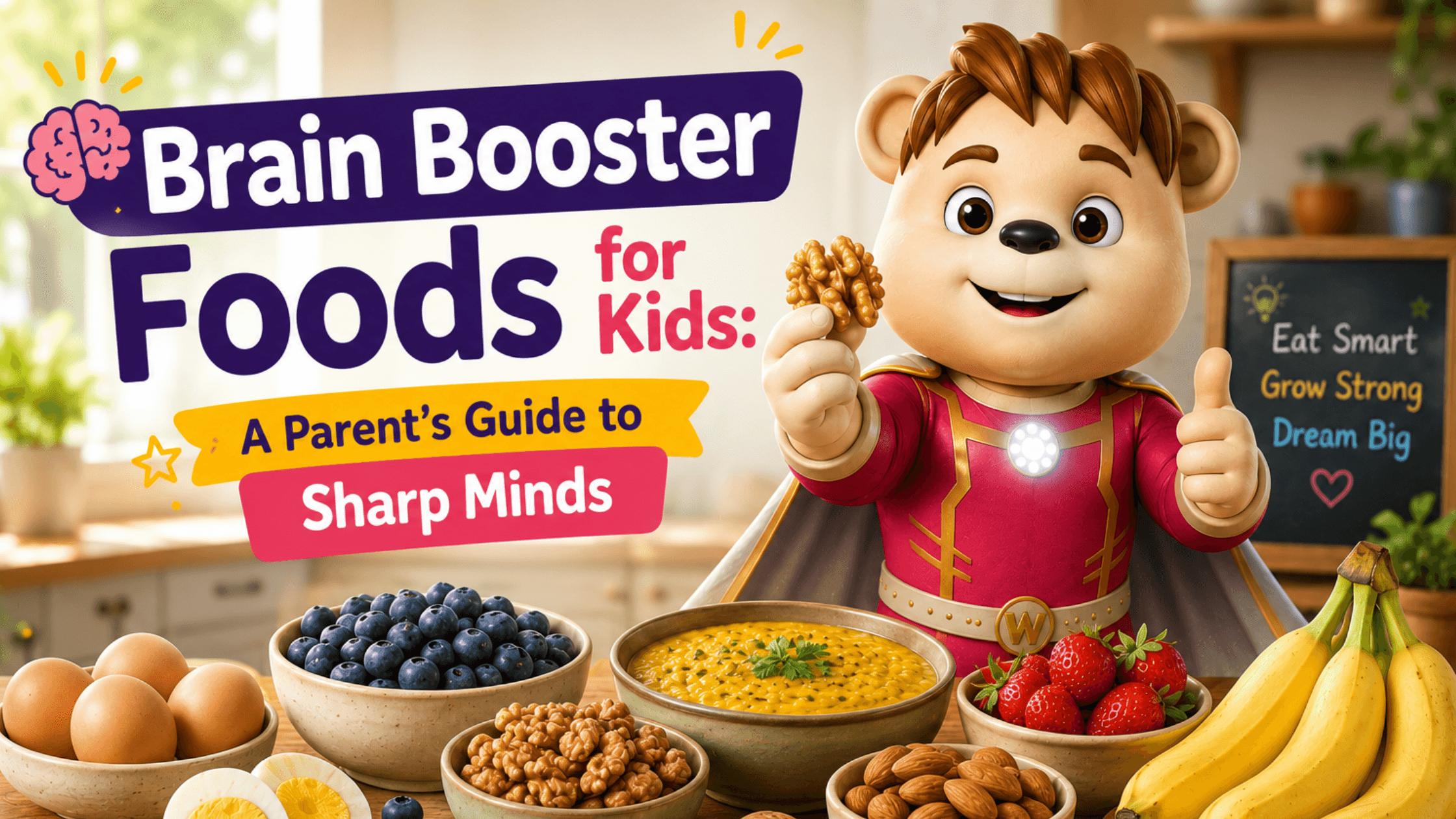
Think about where the child lost himself in his homework. You give him the notebook and pen; there is complete silence in the room, and 15 mins later the child looks up at the fan as though it is the most interesting object in the room. Amusing! We all have been there. We always blame the phone. We blame YouTube. We blame the neighbours' kids for calling him out to play. But honestly? Half the time, they spend time sitting right there in the lunchbox.
What our children consume plays a huge role in how their brains work, in how they pay attention and concentrate in class, remember their tables, and even handle their exam stress. As Indian parents, we already know the value of good food. Our grandmothers gave us ghee and almonds for a reason. Our kitchens have always known what science is only now discovering. Then we’ll explore which brain booster foods for kids are truly effective, why they work, and how to get a fussy child to eat them without turning mealtimes into a battle.
Why What They Eat Actually Matters
Put it this way, you can't run a Royal Enfield on kerosene, same as:The right foods provide the brain with the nutrients it needs to build neurotransmitters, the tiny chemical messengers that transmit signals between brain cells. When you don’t have enough of the right nutrients, the messages get delayed or garbled, or even lost altogether. That’s when you start to see your child being unable to concentrate, forgetting things, or being cranky without an obvious cause. These are the best brain boosters for kids we are talking about today.
The three most important things are -
- The brain is about 60% fat. Healthy fats, including Omega-3 fatty acids, literally build and improve brain cells.
- Antioxidants – These act like a coat of paint, protecting the brain from damage and iron from rusting.
- Complex carbohydrates – These release energy slowly and steadily.
- No sugar highs. No crashes. Just calm, focused energy through the school day.
Top 15 Brain Booster Foods for Kids
1. Eggs
Eggs are a good source of protein in every Indian household in one form or another. And, frankly, they get more credit than we give them. Choline, a nutrient found in eggs, is converted by the body into acetylcholine, a chemical that is directly linked to memory and the communication between brain cells.
Desi Serving Idea: Boil some eggs on Sunday night. Store in the fridge. (And, to be honest, every morning.) Ready in seconds on weekday mornings when you’re running late.
2. Fatty Fish
Now, I know what you're thinking, but my kids won't touch fish that isn't fried with masala." Fair point. But fatty fish like salmon and tuna are genuinely powerful. They're loaded with omega-3 fatty acids that the brain needs to function well. Research shows children with higher omega-3 levels often do better at reading and spelling.Desi Serving Idea: Try tuna mixed with a little hung curd and some jeera, stuff it into a whole wheat paratha wrap. Works surprisingly well.
3. Nuts and Seeds
Badam every morning. We all grew up hearing it. And it turns out, our grandmothers were spot on. Walnuts, almonds, and chia seeds are packed with protein and essential fatty acids. Walnuts, in particular, are high in DHA, an omega-3 fatty acid that directly supports thinking and learning.Desi Serving Idea: Make a "brain trail mix" with walnuts, pumpkin seeds, roasted chana, and a few pieces of dark chocolate. Kids will happily munch on this after school
4. Milk and Yoghurt
We already push milk at home. Good. Dairy is full of B vitamins that support the growth of brain tissue. Full-fat Greek yoghurt also keeps brain cell membranes flexible, which basically means signals travel faster and more efficiently.
Desi Serving Idea: Make a layered parfait with hung curd, seasonal fruits like chikoo or pomegranate, and a little granola or muesli on top. Even picky kids tend to like this.
5. Berries
Blueberries, strawberries, blackberries, these little guys punch way above their weight. They contain compounds called anthocyanins that increase blood flow to the brain and improve how brain cells signal one another. Some people call them "brain berries," and for good reason.
Desi Serving Idea: Freeze some blueberries and drop them into water or smoothies. Kids think it's fun like little purple ice cubes.
6. Green Leafy Vegetables
Palak. Methi. Saag. We've been making these for generations, and there's wisdom in that. Leafy greens are rich in folate and key vitamins linked to better cognitive performance in children. Yes, getting them to eat it is a war. But it's a war worth fighting.Desi Serving Idea: The classic trick blend a big handful of spinach into a banana smoothie. The banana completely masks the taste. Your child will never know. (Don't feel guilty. Parenting is a strategy.)
7. Oats
Unlike those colourful, sugary cereals that spike energy and then crash it twenty minutes later, oats give a slow, steady release of glucose to the brain. That means sustained focus from morning assembly all the way to lunch.
Desi Serving Idea: Make overnight oats in a small jar the night before. Mix rolled oats with milk, a spoon of honey, and some fruit. In the morning, grab and go. No cooking, no stress.
8. Peanut Butter
Peanut butter is rich in Vitamin E, a powerful antioxidant that protects the nervous system. It also provides thiamine, which helps the brain convert glucose into energy efficiently. And in India, where mungfali is a staple in every home, this one's easy to incorporate.
Desi Serving Idea: Spread it on apple slices or whole-wheat bread with a banana inside. Simple, filling, and actually nutritious.
9. Whole Grains
The brain needs a constant supply of glucose, but the right kind. Whole grains like brown rice, whole wheat atta, quinoa, and oats release sugar slowly into the bloodstream. This keeps children alert and steady, instead of bouncy-then-crashed.
Desi Serving Idea: Use multigrain atta for rotis. Most kids genuinely can't tell the difference, and you'll feel much better about it.10. Avocados
Avocados might feel very "urban millennial," but they're genuinely good for the brain. They're packed with healthy monounsaturated fats that help in brain booster function and help maintain healthy blood pressure, both of which matter for long-term cognitive health.
Desi Serving Idea: Mash it with lime, salt, and a pinch of chilli on whole grain toast. Or mix it into a chaat bowl. Yes, avocado chat. Try it.
11. Bananas
We already give our kids bananas. We just don't always know why they're good beyond "it gives energy." Bananas are rich in Vitamin B6, which helps produce dopamine and serotonin, the chemicals that regulate mood, motivation, and concentration.
Desi Serving Idea: Slice bananas into morning poha or upma. Or use them as a natural sweetener in banana pancakes with no sugar needed.
12. Dark Chocolate
70% or higher cocoa. In small amounts. It contains flavonoids and a little caffeine that actually improve memory and focus. This is not an excuse to give your child a Dairy Milk slab for dinner. But a square or two as an afternoon treat during homework? Totally justified.Desi Serving Idea: Keep a small bar in the study drawer. One square when they sit down to study. Makes homework feel slightly less like punishment.
13. Beans and Dals
This is where Indian food has a genuine edge. We eat dal every single day. And it turns out, beans and dals are exceptional brain food, complex carbs for steady energy, protein for cell repair, fibre for gut health, and zinc for brain development.
Desi Serving Idea: Rajma chawal is literally a brain-boosting meal. Moong dal chilla is another excellent option. We've been ahead of the curve all along.14. Sweet Potatoes
Rich in beta-carotene and antioxidants, shakarkandi supports healthy brain cells and also feeds the gut, which researchers increasingly call the "second brain." A happy gut means a calmer, more focused child.Desi Serving Idea: Cut into wedges, toss with olive oil and rock salt, bake until golden. Or just roast whole on the tawa the old-fashioned way. Either works.
15. Turmeric
Haldi has been in Indian kitchens forever. And now science has confirmed what Ayurveda knew centuries ago. The active compound curcumin can cross the blood-brain barrier and has powerful anti-inflammatory and antioxidant effects that support brain health over time.Desi Serving Idea: Add a pinch to scrambled eggs. Or make haldi doodh with warm milk, a little honey, and a pinch of haldi and kali mirch. It's called "Golden Milk" in fancy cafés abroad. We just call it ghar ka nuskha.
Brain Booster Breakfast That Really Works
- The Focus Breakfast: Anda bhurji with multigrain toast & a small bowl of berries. Before they’ve even left the house, we’ve covered protein, healthy fat, and antioxidants.
- The Smart Lunchbox: Whole wheat wrap stuffed with paneer or chicken tikka, a small container of carrot and cucumber sticks with hummus, and a fruit. Balanced, filling, no afternoon crash.
- The Brain-Power Smoothie: 1 banana, ½ cup frozen blueberries, a big handful of spinach, 1 tablespoon almond butter, milk or curd. Mix and its. Done. It looks purple when you see it, tastes sweet, and they will drink it happily.
Practical Meal Ideas (No Masterchef Degree Required)
- Smart Lunchbox: Filled with a whole-wheat wrap (stuffed with Paneer or Chicken Tikka), a small container of carrot and cucumber sticks with Hummus, and a Piece of Fruit! Balanced, Filling, and NO Afternoon Crash!
- The Brain-Power Smoothie: One banana, half a cup of frozen blueberries, a big handful of spinach, a tablespoon of almond butter, milk or curd. Mix and its. Done. It looks purple when you see it, tastes sweet, and they will drink it happily.
- Crambled Eggs with Multigrain Toast: a small bowl of berries makes a healthy breakfast that provides plenty of protein, healthy fat, and antioxidants to help them stay focused in class.
- Smart Lunchboxes: Whole-wheat wrap (filled with paneer) a small container of carrots and cucumbers dipped in hummus with a fruit of your child’s choice. Fills them up with no chance of an afternoon crash.
- The Brain-Power Smoothie: A smoothie with Banana, Blueberries (half cup frozen), a handful of Spinach, Almond butter (one tbsp) and milk/Curd to blend. It looks purple, tastes sweet, so they will definitely finish it all.
Advice From One Indian Parent to Another
Try to get your kids to help out in the kitchen. If they have helped to make a meal, then there is a higher chance that they will eat it. Helping out in the kitchen can be as simple as stirring the dal or washing the vegetables for a meal. The 10-exposure rule if your child refuses to eat a new food, then don’t give up on them just yet. Children, on average, need to see a new food 10-15 times before they will even try it, so keep offering it to them. Make sure your child is hydrated, as even slight dehydration can affect how your child’s brain works, and they may become irritable. Make sure your child has a full water bottle before they go out the door and remind them to drink it.
Sleep Better
Cozy Night Poems
Discover sweet bedtime poems for kids that create calming nighttime routines, peaceful sleep, and cozy parent-child bonding moments.
FAQs
What foods help kids focus better?
Foods high in protein and complex carbs, like eggs and oats, give steady, sustained energy that keeps children attentive through the school day.
Which fruit is the best for brain development?
Berries, especially blueberries, are among the best sources of antioxidants that improve how brain cells communicate and boost memory.
Are nuts good for children's memory?
Yes. Walnuts and almonds contain Vitamin E and Omega-3 fats that protect brain cells and support memory over time.
What breakfast improves concentration in kids?
A breakfast that combines fiber and protein, like oatmeal with nut butter, or eggs on whole-grain toast, is ideal for sustained focus.
How does omega-3 help a child's brain?
Omega-3 fatty acids are literally part of the brain's structure. They improve blood flow and help build the neural pathways that carry information.
