Wooby

How Blue Light Affects Children's Eyes: Symptoms, Risks & Protection Tips
Published On: 24 September 2026
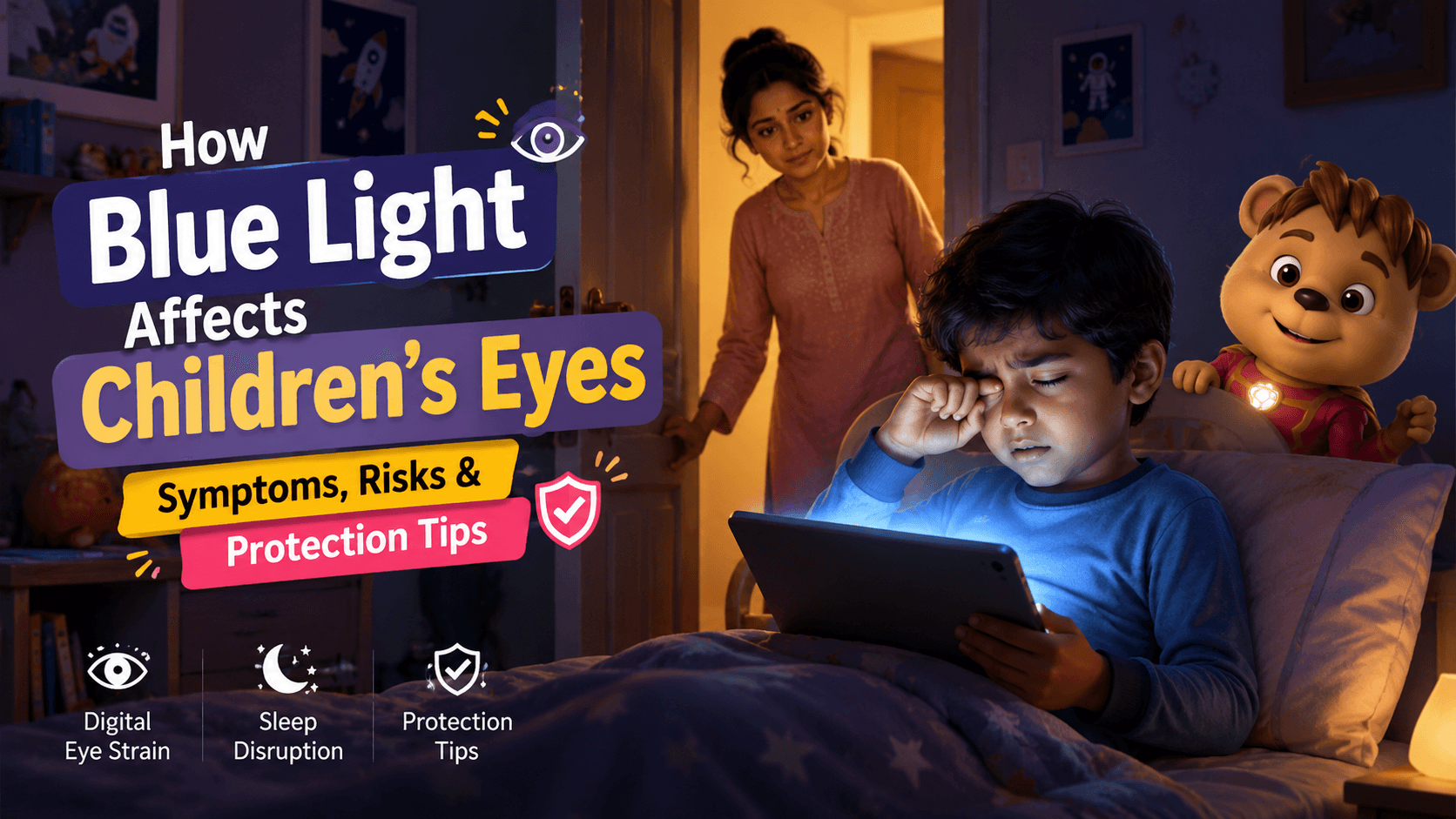
Meera noticed the warm light coming from under the door of the bedroom. It was almost 10 PM. She had put 7-year-old Aarav to bed about an hour before, kissed him goodnight, and reminded him that school would start again in the morning. She opened the door quietly, expecting to find him fast asleep. She found him sitting under the covers and holding a tablet a mere few inches away from his face. His eyes were red and glassy.
He was blinking and rubbing his eyes with the back of his hand. “Mumma, my eyes are hurting,” he complained. She assumed that Aarav was just tired, but in the following weeks, she noticed other odd and concerning changes. He started complaining of headaches after doing his online homework. He started struggling to get up and ready for school in the morning.
His teachers noticed that he seemed distracted in class. Meera began to wonder, was it too much screen time? Had all of the online homework and the blue light coming from his tablet started to hurt his eyes?
These are the same questions worrying all families these days, because kids are using screens more than ever to learn, play, and even socialize. At the same time, parents are confused about the dangers of blue light, what symptoms to watch for, and how to help their children use technology in a way that doesn’t hurt their eyes. This guide will help parents understand the real effects of How Blue Light Affects Children's Eyes, what the common myths are, and the best ways to start protecting their children’s eyes now.
What Is Blue Light?
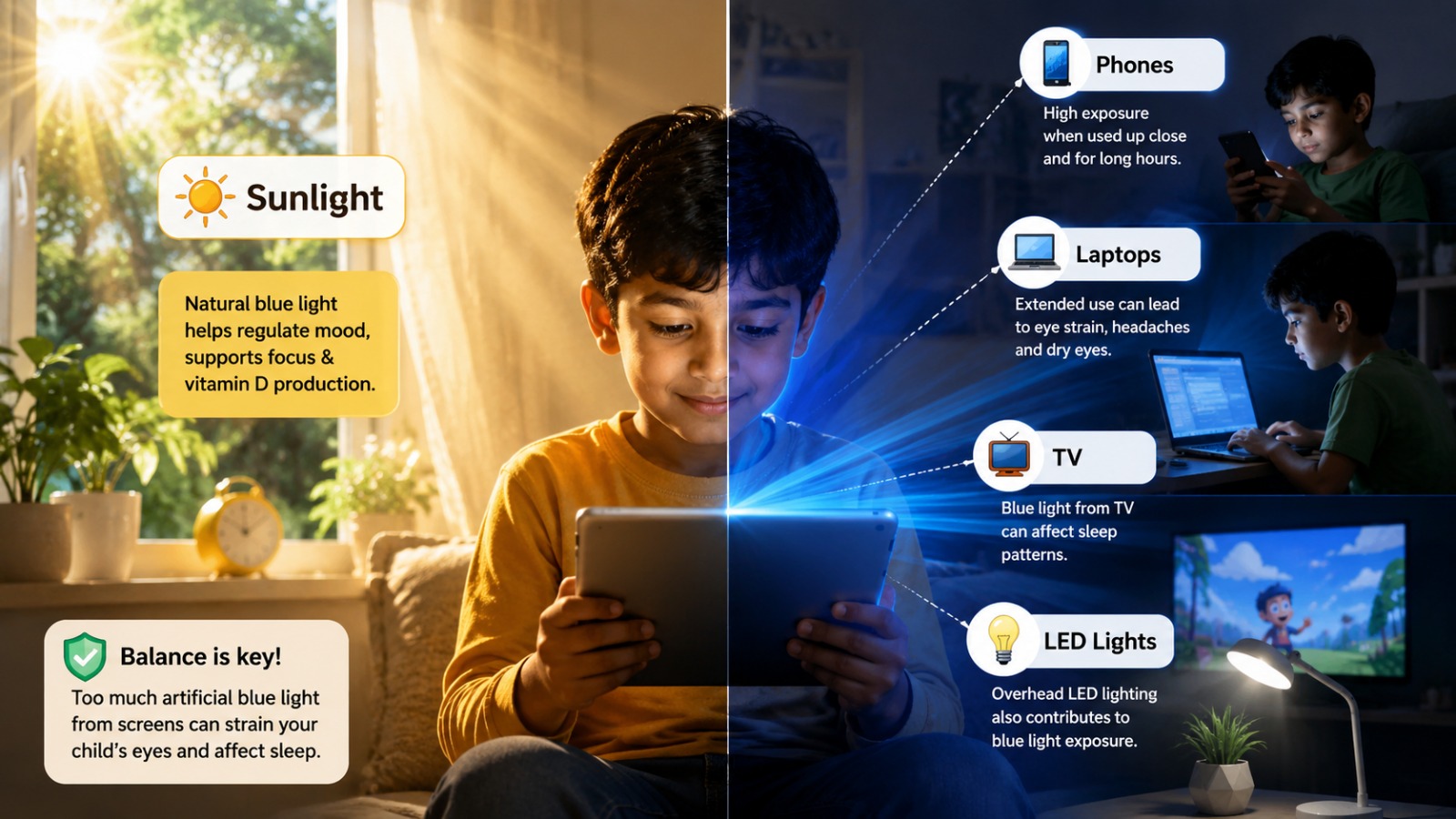
- Smartphones
- Tablets
- Televisions
- Laptops
- LED room lighting
- Monitors
- Gaming Consoles
Compared to sunlight, screens have a small amount of blue light. The problem is that children place devices close to their faces. Children can be exposed to blue light for long periods and late into the night. Imagine a child doing online classes for two hours, then doing homework for another hour, and then watching cartoons or playing games before going to bed. Blue light exposure to children can be a problem. It is the combination of blue light exposure for long periods, being close to the screen (which causes reduced blinking), and the resulting disrupted sleep patterns.
Are Children's Eyes More Sensitive to Blue Light?
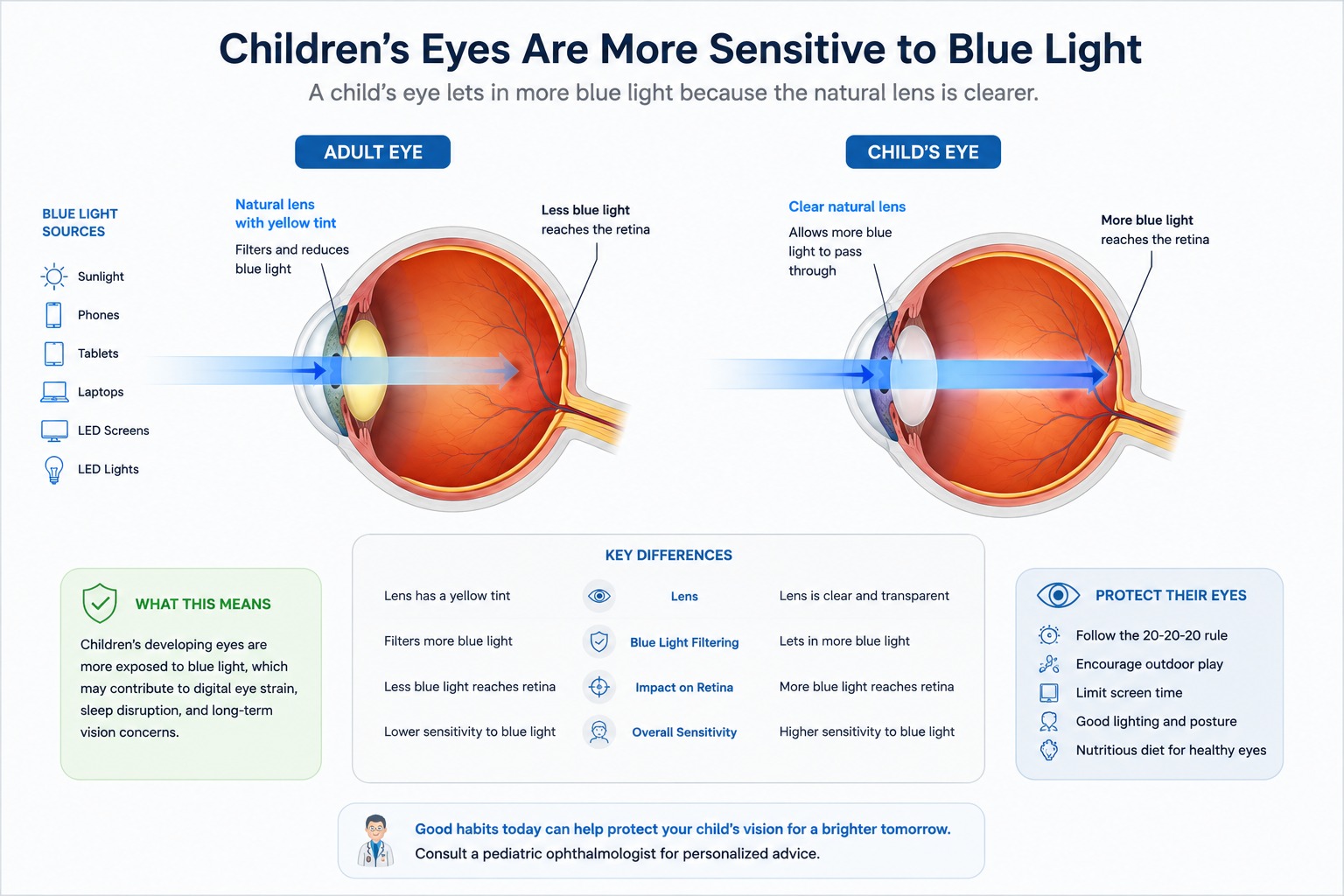
Children's eyes are different from adult eyes; they are still developing. As children grow, their visual systems develop along with them.
In adults, the eye’s lens slowly becomes tinted with a yellow hue, which can filter blue light as it enters the eye. Children's lenses are clearer. Consequently, more blue light can enter the eye and strike the retina. Most Children’s lenses transmit more blue light than adult lenses, and the implications of this discrepancy in transmission on the health of the retina are still being explored. The retina is the light-sensitive tissue that is located at the back of the eye. It is responsible for the conversion of light to the neural signals that are sent to the brain.
Looking at the development of children's eyes, on average, their retinas are more exposed to blue light than is good for their health. Slightly less blue light reaches the retina of adults, and the resulting strain on the eye after normal exposure to screens is not sufficient for the retina to be injured, based on the evidence available. Children value entertainment more than they value the health of their eyes. Eye strain in adults is alleviated by the behavioral tendency to take breaks; however, there is no such tendency in children. The symptoms of eye strain in children are often stated indirectly, and parents should pay closer attention to their children during their entertainment.
Does Blue Light Damage Children's Eyes?
This is probably the most common question we get from parents.
The answer is as follows:
Right now, there is no evidence from scientists that normal screen time causes permanent damage to the eyes.
This does not mean there is no harm in unrestricted screen time. Laboratory studies have shown that prolonged exposure to blue light can cause oxidative stress to retinal cells.
Oxidative stress is the accumulation of free radicals in the body that exceeds the body's ability to defend itself. These studies of blue light and retinal cells are required to understand the potential biological pathways of blue light. Screens of digital devices do not compare to the conditions of laboratory experiments that are done to study the prolonged exposure to blue light. Large quantitative studies in medicine have shown that the normal use of digital devices by children does not cause permanent damage to retinal cells.
What researchers do know is that prolonged screen time can cause:
- Eye fatigue
- Temporary blurred vision
- Headaches
- Dry eyes
- Difficulty falling asleep
What the researchers do not know is the long-term consequences for a child who has prolonged screen time. The researchers are monitoring children who have grown up with smartphones and tablets to see if the cumulative exposure to screen time will cause other risks to children.
Myth vs Fact
Myth: Blue light of digital screens will cause permanent blindness.
Fact: There is currently no research that supports the idea of permanent damage to the eye; however, the excessive use of digital screens can cause discomfort of the eye, visual fatigue, and sleep disruption.
Symptoms of Blue Light Exposure in Kids.
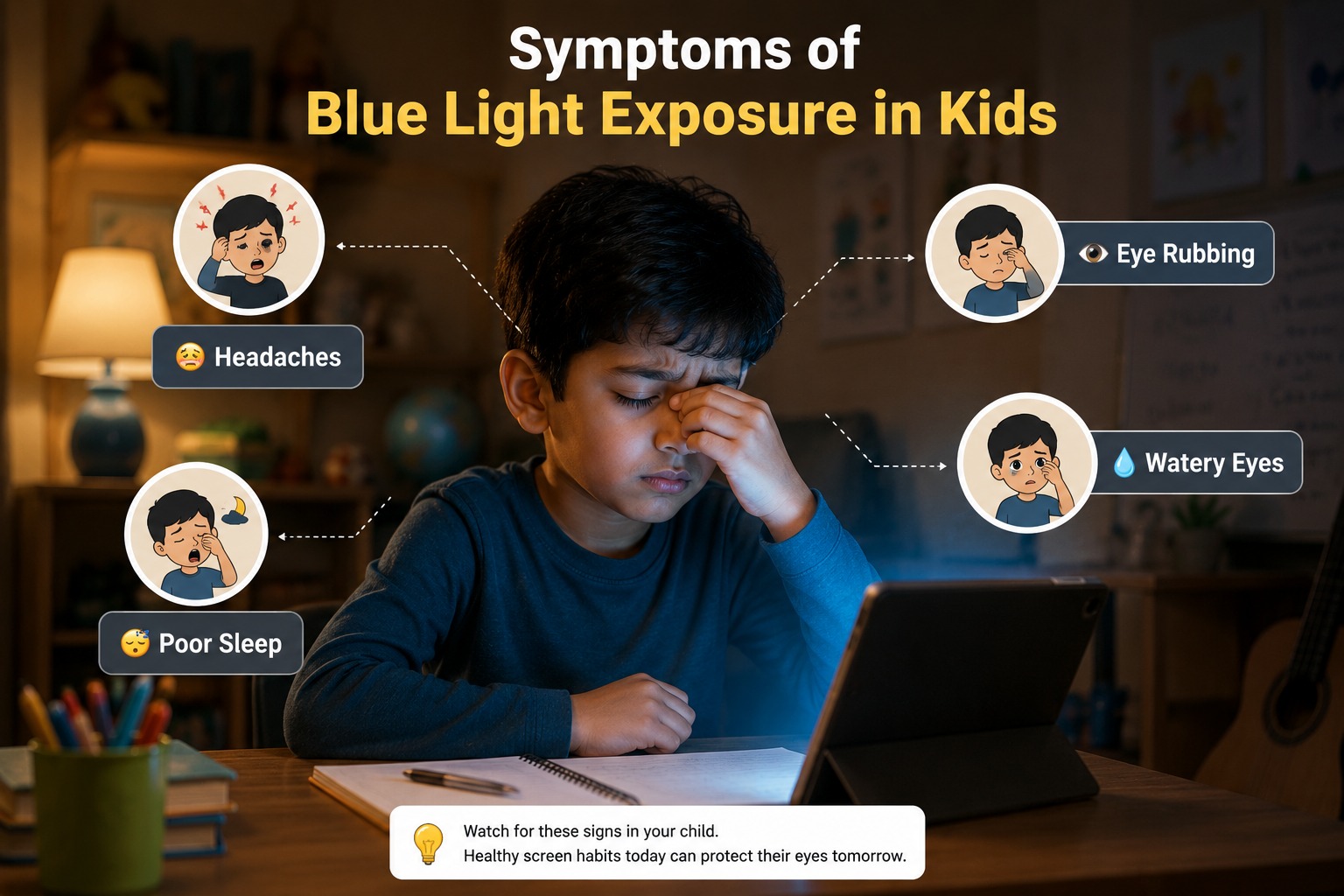
Aarav's constant eye rubbing was not surprising for many parents. Many kids are too busy with something else to notice the source of symptoms of excessive screen time. Most parents begin to notice symptoms of focus before the focus shifts to the kids.
Here are the symptoms that kids who spend too much time in front of screens and who are exposed to too much blue light.
1. Abnormal blinking
Some kids can even begin to blink in constant repetition to try to keep their eyes moist.
2. Rubbing
This can be a sign of several things, ranging from a bad habit to irritation and dry eyes.
3. Becoming too watery.
When eyes become dry, the body sometimes responds by overproducing tears.
4. Head pain
Strain can cause a pain in the head and can be a result of overexerting the eyes in a prolonged gaming episode.
5. Eyes too burning or too itchy, hot
Some kids' words to describe eye discomfort can be even a burning or a hot, itchy feeling.
6. Poor focus
Strained or dry eyes can cause difficulty shifting focus from near to far.
7.Poor screen posture
Can cause strain in the neck and shoulders. Tired eyes can also contribute to being more emotional.
Watch how your kid behaves after too much screen time. Have they developed a habit of squinting to watch TV, or have their previously beloved books become unreadable to them?
Do they complain that letters look blurry? These small clues deserve attention.
How Much Screen Time Is Safe for Kids?
Most world health organizations agree that limiting screen time should not be an absolute measure. Instead, they focus on developing healthy screen habits.
The following recommendations come from pediatric organizations.
Age Group Screen Time Recommendation. Under 2 years, screen time should be avoided, except to make supervised video calls.
-
2 – 5 years. Only 1 hour of quality content per day
-
5 – 12 years 1 to 2 hours of screen time for play and relaxation.
Teenagers' free time screen use should follow healthy habits and should include frequent breaks.
From an evaluation perspective, the quality of screen use should be considered along with the quantity of time.
The needs of a child who is attending an online science class are very different from those of a child who is watching videos for 4 hours straight.
Parents can evaluate screen use with the following questions:
- Is the content educational?
- Is the screen use taking the place of sleep or outdoor activity?
- Does the child seem bored or uncomfortable with the choice of screen activity?
Note: Use the following information to help you set and communicate
10 Parent-Approved Tips to Protect Kids From Blue Light.
As parents, we want to shield our little ones from the damage of blue light. The good news is that we don't need to eliminate the use of technology, just encourage better habits.
1. The 20-20-20 Rule
Every 20 minutes, encourage your children to look at something at least 20 feet away for at least 20 seconds to help relax their eye muscles.
2. More Outdoor Play
Children who can ride their bikes, play football, skip rope, or take walks after dinner, can be exposed to natural light and reduce the effects of near work.
3. Screens Are To Be Held At Arms' Length
Make sure holding phones are at least an arm's length away and not any closer.
4. Less Bright Screens
Screens should be less bright than the environment as extremely bright screens can cause discomfort.
5. Replace All Screens An Hour Before Bed
Repeating your nightly routine with only books or stories instead of devices will help produce the sleep hormone melatonin and improve sleep.
6. Challenge Them To Blink
Make blinking fun and even challenge young ones to blink 10 times on every break.
7. Use Big Screens, Not Small Phones
The distance of a large screen, like a TV or laptop, placed far away, is better for your eyes than a small smartphone.
8. Encourage Proper Posture
Legs need to be on the floor and screens should be below eyes to help relax muscles.
9. Create Family Time Without Screens
Quiet evenings with natural activities like board games and gardening help children disconnect.
10.Feed Healthy Eye Food
You can't eliminate screen strain with nutrition, but you can help your eye with healthy foods like spinach and carrots.
Good nutrition supports more than just eyesight. Certain nutrients also play a role in memory, focus, and overall brain development. Read our complete guide on brain booster foods for kids to learn which foods can benefit growing minds.
Conclusion
Small changes may not eliminate technology from daily life, but they can help protect the little eyes that are still learning to see the world.
FAQs
1. Can blue light permanently damage children's eyes?
Current evidence does not show permanent retinal damage from normal screen use, although excessive exposure may contribute to eye strain and sleep disturbances.
2. How much screen time is healthy for a 5 to 10-year-old?
Most experts suggest limiting recreational screen time to around one to two hours daily while ensuring adequate sleep and outdoor play.
3. Are blue light glasses useful for kids?
Some children find them comfortable, but experts generally recommend focusing on healthy screen habits and regular breaks before considering special eyewear.
4. Can excessive screen time cause myopia?
Prolonged near work and reduced outdoor activity appear to be stronger contributors to myopia than blue light exposure itself.
5. Can blue light affect children's sleep?
Evening exposure to blue light may suppress melatonin production and delay sleep onset.
6. At what age should children get their first eye examination?
Many pediatric eye specialists recommend a comprehensive eye examination before starting school and earlier if parents notice vision-related symptoms in kids.
